

Remember The Balenciaga Pope?


It’s officially been 3 years since the very first AI deepfake image went viral.
In March 2023, Pablo Xavier1 was playing around with a new generative AI model called Midjourney. While high on mushrooms, he decided it would be funny to create a hyperrealistic photo of the pope walking around Rome in a designer jacket. A week later, every major international media outlet wanted to interview him.
The majority of people seeing the hyperrealistic AI image for the first time thought it was real.
Fast forward to April 2026.
On Tuesday evening I visited the REFRESH 2026 “Algorithmic Entanglements” exhibit hosted at Swissnex on SF Embarcadero’s Pier 17. At the heart of a lofty warehouse room is a jacket designed by an artist inspired by the first AI viral image of the pope.
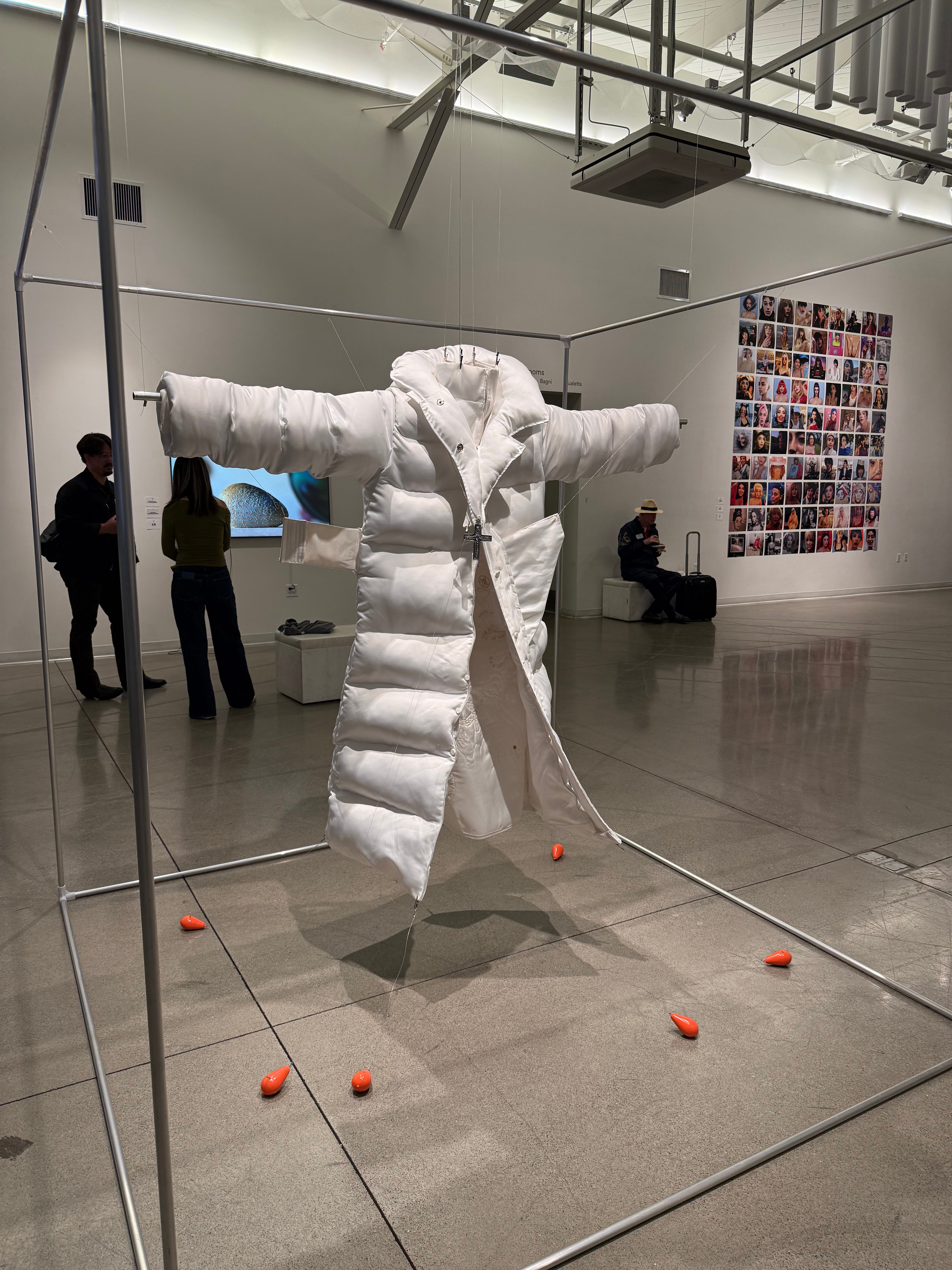
The jacket is “real”, but “broken”. The seams are off. It doesn’t close properly. You can’t actually wear it. Like AI hyperrealistic images, you start noticing subtle flaws the longer you look.
The tension of the question — what’s real, what’s fake? — lingered palpably inside and outside the exhibit.
It was Tuesday, April 7th, an hour shy of Trump’s deadline.
At some point that day, we’d all watched B2 Bomber’s flying to Iran on our phones. The collective cognitive dissonance hummed quietly through the evening, all of us genuinely unsure if Trump was about to make good on his threat to erase all of Iranian civilization.
The Future of AI and Cinema panel
I was drawn to the pier that evening to attend a panel on AI and Cinema called “Future of Cinema: From Locarno to San Francisco”, along with a mix of filmmakers, artists, media researchers and technologists.
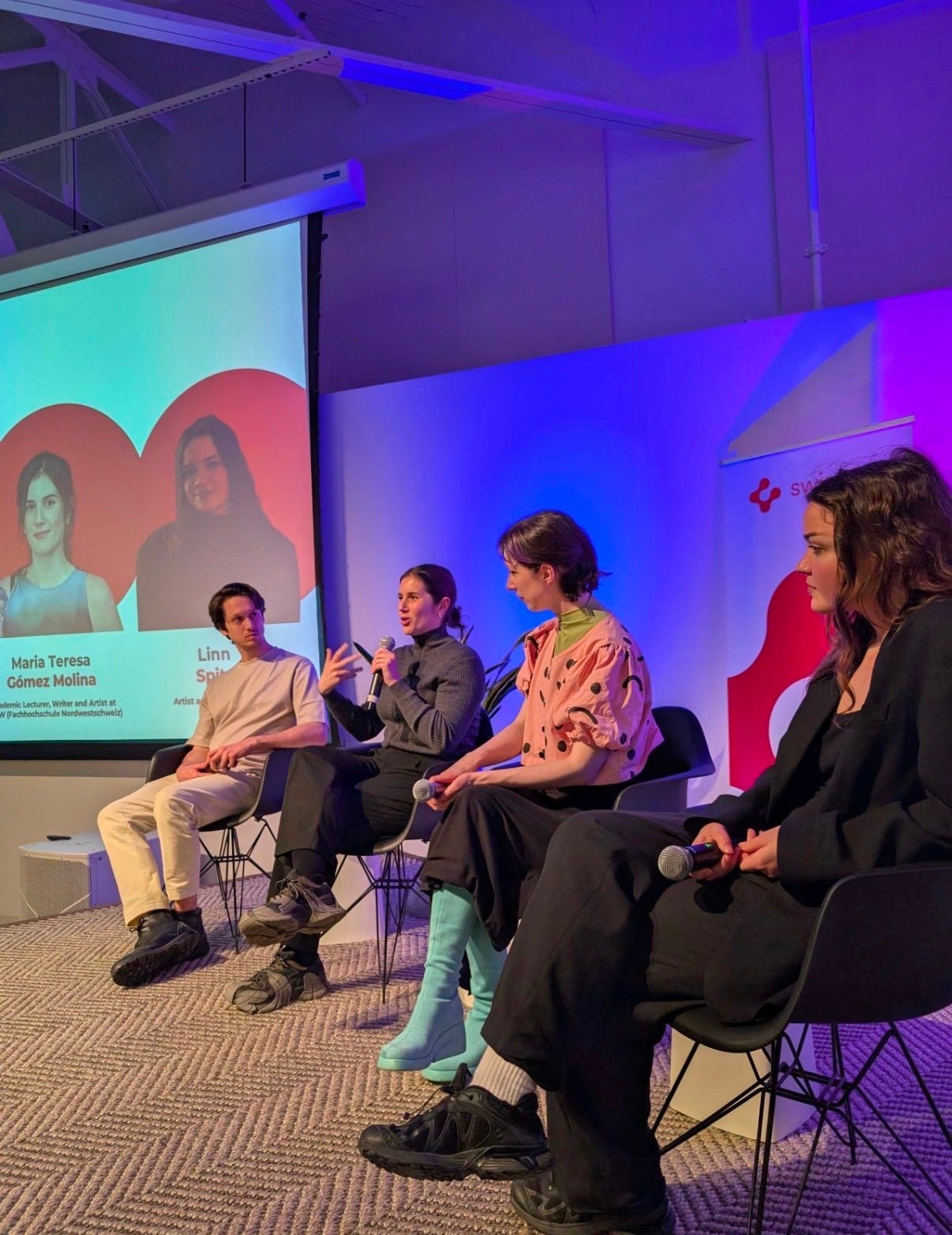
The event featured four short films made with AI, followed by a Q&A with the filmmakers sharing their perspectives on how AI is reshaping cinema across form, authorship, memory and production.
We watched the shorts2 and then the filmmakers were interviewed about their creative process.
The discussion was fascinating.3
Four filmmakers. Three say: another tool. One says: deception, replacement. Then someone mentions Propp — 1928, Morphology of the Folktale, the discovery that all stories are structurally identical across cultures and time.
The Folktale algorithm — the structural invariance of story across every medium transition in human history — has been taking place since human discourse evolved from the oral tradition. Every time a new medium for storytelling has been invented, people panic about its authenticity.
The true source of the panic is often misidentified. The panic comes from the uncertainty of trying to orient to a new technology.
When linear perspective was invented in painting by Filippo Brunelleschi in the early 1400s, people had to learn how to see it.
It takes time for humans to recognize familiar story structure through a new medium. Like the jacket, you have to stare at it for a while before you can see and distinguish nuance in an otherwise familiar pattern.
Cinematography has had this debate several times in its relatively short century of existence.
When silent films gave way to talkies — is it moral? Is it deception? Is it cinema or not? As digital started to replace film — is it moral? Is it deception? Is it cinema or not?
Every transition looked like the end of authentic storytelling.
None of them were.
“You eat yourself when you work with AI,” remarked filmmaker Andrea Gatopoulos. “AI is a ping pong with yourself.” He’s not wrong, and whether AI is a legitimate creative partner or not is a topic for another essay. The point isn’t whether AI needs to be your new favorite medium for artistic expression.
The point is the algorithm of the folktale.
Eventually, we stop arguing about the vessel and focus on the story.
Cinema is storytelling.
With every new medium, we have to relearn how to see.
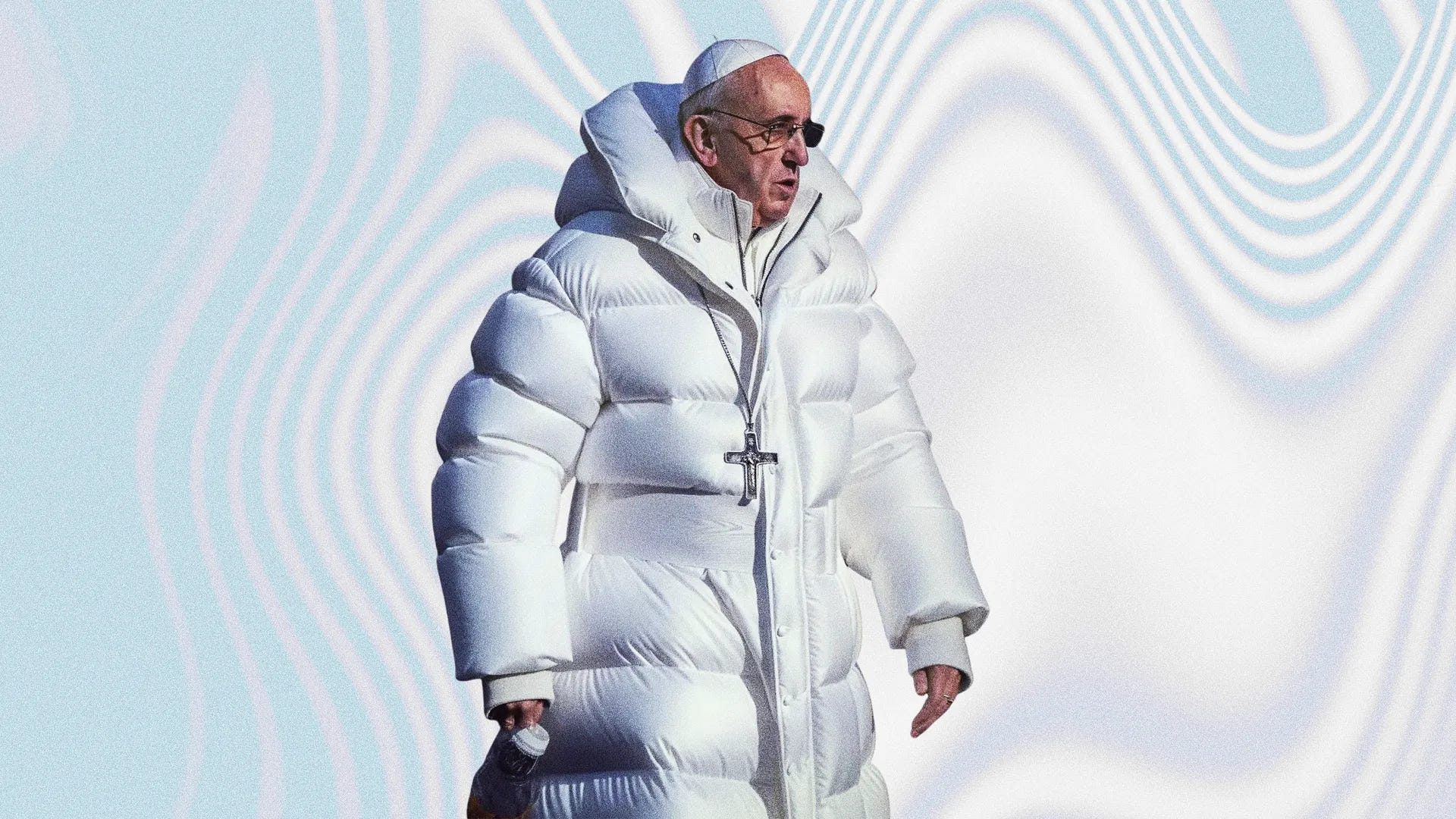
Just like we learned to see the Balenciaga pope.
*First of three notes from the Swissnex panel.
In an interview with Buzzfeed.com, Pablo shares how he first took up using Midjourney after one of his brothers died. The first viral AI image was created by a guy using generative AI to deal with loss and grief; a fact that continues to feel strangely poetic 3 years into the AI era.
The first film was AI generated on models trained by real actors in live action style and features themes of circus and fairies that mimic the sycophantic therapist speak coined by ChatGPT. The second was modern retelling of Rumpelstilskin, retrofitted with a lesson on technocratic rule and algorithm design, commenting on how we explore the same algorithms of stories through different mediums over time. The third was notable for it’s interrupt of countryside idyllic archival footage with a Youtube style AI ad break. Post-ad, the montage continued with a grotesque human birth intercut with an unfolding atomic explosion — an eerie parallel as Trump’s deadline approached in real time. The fourth was a stop motion mix of AI generated images interwoven with the filmmaker’s handmade animations, a reflection of her own conflicting feelings about AI’s impact on her artistic agency.
By the end, I had probably 20 pages worth of notes jotted down into my little 2x3” notepad. This is the first of a series of 3 essays on The Swissnex Panel.